
The Hidden Impact of Driveways: How Small Design Choices Shape Our Streets
By Alex Karki - Principal Traffic & Parking Engineer
When we think of traffic congestion or road safety, we often picture main roads, intersections, or speeding drivers. But in many suburbs across the Hills District, one of the most overlooked contributors to local traffic issues is the humble driveway.
Figure 1 A contemporary Hills District driveway with a gentle slope, proper width, and safe visibility—highlighting how design details improve street safety and accessibility.
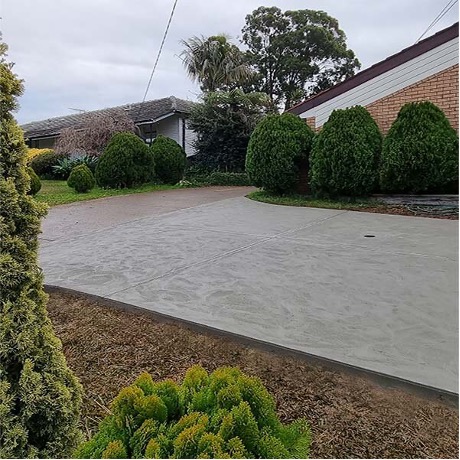
Poorly designed or non-compliant driveways can create dangerous situations – not just for the driver but for pedestrians, cyclists, and other motorists. From steep gradients that cause vehicles to scrape or stall, to narrow widths that force cars into oncoming traffic, these seemingly minor issues add up.
In newer developments, we’re also seeing the rise of basement parking and vehicle turntables—space-saving solutions that demand strict compliance with Australian Standards such as AS 2890.1. If these requirements aren’t met, the result can be blocked footpaths, queuing on roads, and even access issues for emergency services.
Good driveway design isn’t just about looking neat – it’s about keeping everyone safe. Making sure ramp grades are gentle enough, visibility is clear, and vehicles can enter and exit without conflict can make a big difference. This is where expert input becomes essential.
In preparing traffic assessments for numerous projects across the Hills District, our team has seen how overlooked driveway design can lead to safety issues and council compliance problems. Drawing on this experience – from residential duplexes to childcare centres – we’ve worked closely with planners and architects to ensure designs meet both Australian Standards and real-world operational needs.
As our suburbs grow, small elements like driveway design will continue to play a big role in shaping how safe, efficient, and accessible our streets remain. It pays to get it right early.
Key Driveway Design Elements (AS 2890.1:2004)
| Design Element | Standard Requirement | Notes |
| Gradient (Ramp Grade) | Max 1:4 (25%) for short sections; transitions needed at changes in slope | Steep ramps require grade transitions to prevent underbody scraping |
| Width | Min 3.0 m for single-lane; 5.5 m for two-way flow | Should suit the number and type of vehicles expected |
| Sight Distance | 2.0 m x 2.5 m sight triangle at property boundary | Crucial to avoid collisions with pedestrians on footpath |
| Vertical Clearance | Min 2.2 m for general access; 2.5 m if access is required for service/emergency use | Often overlooked in basement or under croft parking areas |
| Queuing Space | 6.0 m minimum between property boundary and first control point (e.g. gate/boom) | Prevents vehicles from spilling onto the road while waiting to enter |
👤 About the Author:
Alex Karki is the Principal Traffic Engineer at Sydney Traffic Engineers. With over a decade of experience on major NSW infrastructure projects, he helps councils, developers, and communities solve transport challenges – from car park layouts to city-wide transport strategy. Learn more at www.trafficengineers.sydney.
Alex Karki
BEng (Hons) MEng(Res) UNSW, MAITPM, MIEA
Principal Traffic & Parking Engineer
P: 02 9056 5043
M: 0491 375 515
E: info@trafficengineers.sydney
W: www.trafficengineers.sydney
L: Nexus Building
4 Columbia Court, Norwest NSW 2153
Postal: Post Box 8020,Norwest, NSW 2153