

Warren Kirby MP Member of the Legislative Assembly Member for Riverstone Deputy Chair, Joint Standing Committee on Road Safety (Staysafe) Inquiry into Electric and Hybrid Vehicle Batteries.
As electric vehicles become an increasingly common sight on roads across The Hills and Greater Sydney, attention is turning not only to the environmental benefits of cleaner transport but also to the practical question of how this technology can be used safely in homes, workplaces, car parks and public spaces. For many households, the shift to electric transport represents a significant change in daily life, from installing home chargers to learning new maintenance routines. That growing familiarity with EVs has brought broader discussion about battery safety, emergency preparedness and consumer awareness, particularly as lithium-ion technology is also used in e-bikes, e-scooters and other personal mobility devices.
The NSW Parliamentary Inquiry into Electric and Hybrid Vehicle Batteries examined both the opportunities and the challenges associated with this transition. Its terms of reference included the risk and management of fires involving batteries in electric and hybrid vehicles, the risks faced by workers in the automotive sector and by emergency services personnel, and whether current training and equipment are adequate for dealing with these emerging hazards. The inquiry also looked beyond passenger cars to light electric vehicles such as e-bikes and e-scooters, recognising that battery safety is part of a much larger conversation about the way energy-dense devices are being integrated into everyday life. While the inquiry found that EV battery fires are relatively rare, it also concluded that such incidents can be more complex to manage and may require specialised response procedures, equipment and public guidance.
Riverstone MP Warren Kirby, who served as Deputy Chair of the Joint Standing Committee on Road Safety (Staysafe), helped guide the inquiry’s examination of battery safety, emergency response capability and future regulatory needs. Speaking when the report was tabled in Parliament, Mr Kirby noted that “the risk posed by electric vehicles (EVs) is relatively low”, while recognising the importance of ensuring emergency services, industry and consumers are equipped with the knowledge and safeguards needed to safely manage battery-related risks. His involvement is especially relevant for communities in Sydney’s north-west, where population growth, new housing and changing transport habits are all contributing to greater uptake of electric vehicles and associated charging infrastructure. As more families consider EVs as a practical option, local interest naturally extends beyond affordability and convenience to questions about product standards, safe charging and how emergency services are preparing for new types of incidents.
During the inquiry, the Committee heard evidence from emergency services, automotive experts, industry representatives, researchers and government agencies. That evidence painted a nuanced picture. On the one hand, electric vehicles generally present a lower fire risk than conventional petrol and diesel vehicles, a finding that is important in countering alarmist or misleading claims. On the other hand, the inquiry acknowledged that when battery-related incidents do occur they can behave differently from conventional vehicle fires. This can affect firefighting tactics, recovery operations, storage of damaged vehicles and post-incident monitoring. The evidence also highlighted broader workplace implications for mechanics, tow truck operators, salvage workers and first responders, all of whom may need updated procedures and training as the vehicle fleet continues to change.
Among the inquiry’s key recommendations were stronger oversight of e-bikes and e-scooters, improved training for emergency responders, the development of standard emergency response guidance, and updated building codes to ensure that EV charging infrastructure and related fire risks are properly considered in both new and existing developments. The Committee also called for better data collection on injuries and health impacts linked to battery fires, recognising that good policy depends on reliable evidence. Just as importantly, it recommended greater public education on the safe purchase, use, charging, storage and disposal of lithium-ion batteries. Taken together, these recommendations reflect a practical approach: encouraging innovation and cleaner transport while making sure safety systems, consumer information and regulatory frameworks keep pace.
The NSW Government has since responded positively to the report, supporting a range of measures intended to strengthen battery safety and consumer protection. Publicly available material indicates support, in full or in principle, for actions such as ongoing inspections of personal mobility devices, stronger safety requirements for products sold in NSW, improved consumer information at the point of sale, and continued work with agencies and online marketplaces to reduce the circulation of unsafe devices and chargers. The response also supports the need for specialised safety training, clearer protocols and a broader public awareness effort. This is significant because battery safety is not simply an issue for EV owners alone; it intersects with retail regulation, apartment living, waste disposal, emergency management and the broader transition to cleaner forms of transport.
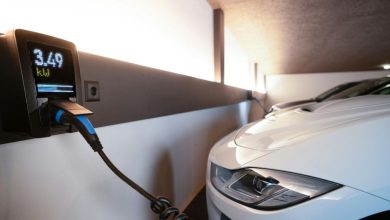
As electric vehicle ownership continues to increase, planning for EV charging infrastructure is becoming an important consideration for new residential, mixed-use and commercial developments. Across New South Wales, councils are increasingly seeking to ensure that new developments can accommodate future charging demand while maintaining safe and efficient parking layouts. Sydney Traffic Engineers regularly assists developers, architects and councils with Development Application (DA) assessments involving EV charging infrastructure, including parking layout reviews, traffic impact assessments and compliance with relevant planning controls. By integrating charging facilities into the design process early, developments can better support future transport needs while maintaining safe vehicle access and parking functionality
For residents across The Hills and north-west Sydney, the findings are particularly relevant. EV ownership is expected to continue rising over the coming decade, and more households are likely to install home charging systems or purchase other battery-powered mobility devices. That makes public education especially important. The inquiry highlighted the value of buying compliant products from reputable suppliers, following manufacturer charging instructions, avoiding damaged or modified batteries, and disposing of batteries responsibly through appropriate collection or recycling channels. For people living in higher-density housing, these issues can be even more pressing, as building design, parking arrangements and shared spaces all influence how charging and storage are managed safely.
The work undertaken by the Staysafe Committee demonstrates the NSW Parliament’s commitment to balancing innovation with public safety rather than treating them as competing goals. Electric transport technologies are likely to remain a growing part of everyday life, whether through passenger vehicles, commercial fleets or smaller mobility devices. As that transition continues, governments, industry, safety regulators and the community will all have a role to play in making sure standards are understood, infrastructure is appropriate and frontline responders are well prepared. In that sense, the inquiry is not just about managing risk; it is also about building confidence in the systems that support cleaner transport.
To help motorists locate publicly available charging facilities, Sydney Traffic Engineers has also developed an interactive map of EV charging locations across Greater Sydney. The map provides a convenient reference for residents, commuters and visitors seeking nearby charging options and demonstrates the growing availability of charging infrastructure throughout the region. Readers can explore the map at Sydney Traffic Engineers EV Charging Locations Map.
With the adoption of electric vehicles expected to increase steadily across New South Wales, the initiatives arising from the inquiry will play an important role in shaping public confidence and policy over the years ahead. For communities such as Riverstone, The Hills and the wider north-west corridor, the issue is no longer theoretical. It is becoming part of everyday planning, purchasing and transport decision-making. By focusing on evidence, preparedness and practical regulation, the inquiry has helped set out a roadmap for how NSW can embrace cleaner transport while keeping people safe. That balance will be crucial as the state continues its transition towards a lower-emissions future.
About the Author:
Irman Haizal is a Senior Traffic & Parking Engineer at Sydney Traffic Engineers. He works on transport and infrastructure projects across New South Wales, assisting councils, developers and communities with traffic impact assessments, parking studies, road safety reviews and transport planning advice. As electric vehicle adoption continues to grow, he has been involved in projects that consider EV charging infrastructure, parking design and future transport planning outcomes. Learn more at Sydney Traffic Engineers.
Learn more at www.trafficengineers.sydney.
Irman Haizal
Senior Traffic & Parking Engineer
P: 02 9056 5043
M: 0428 153 304
E: info@trafficengineers.sydney
W: www.trafficengineers.sydney
L: Nexus Building
4 Columbia Court, Norwest NSW 2153
Postal: Post Box 8020, Norwest, NSW 2153